
- Home/
- Buy Clomid at Low Price in the United States Online
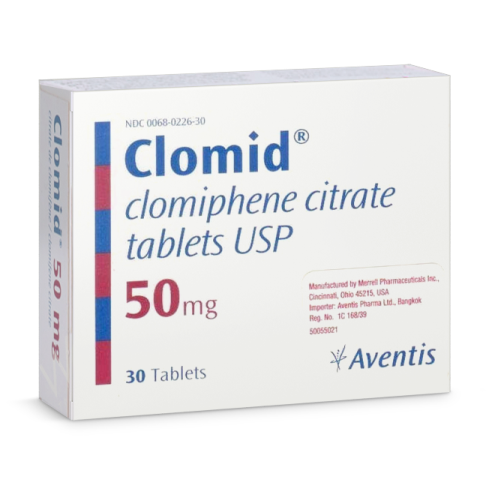
When Clomid Becomes the Question: A Moment in the Exam Room
It’s a late afternoon in a busy OB/GYN’s office in Denver. Two years of trying, three months of charting cycles, and the fifth negative home pregnancy test this winter. A young couple sits across from their doctor, hopeful and exhausted. “We’re thinking about starting Clomid. Is that the next step for us?” The room is quiet for a moment.
This is the fork in the road for thousands of women every week in the United States. Clomid—brand name for clomiphene citrate—might be the word you’ve heard tossed around in online forums, in whispered conversations at baby showers, or brought up by that well-meaning coworker who “swears it worked.” But should it be your next step? Or will it send you down a path you’re not prepared for?
The United States prescribes Clomid more than any other fertility medication. Yet no two women’s journeys with it are the same. Knowing what to expect sets the stage for everything that follows.
Is Clomid Really the Right Fertility Treatment for You?
Too many women arrive at their first fertility consult convinced Clomid is their ticket to pregnancy. Others fear it will bring only disappointment or side effects. Both mindsets miss the heart of how Clomid fits into modern infertility treatment in the United States.
Clomid is recommended primarily for women who do not ovulate regularly—especially those with polycystic ovary syndrome (PCOS) or unexplained anovulation. For women whose infertility is caused by blocked fallopian tubes, low egg reserve, male factor issues, or uterine abnormalities, Clomid is not likely to help and may even delay more effective treatments.
- Your menstrual cycles are irregular, infrequent, or absent (often due to PCOS)
- Your fertility testing shows normal fallopian tubes and a healthy uterus
- Your partner’s sperm analysis falls within the normal range
- You are under 35 and have not tried ovulation induction before
Clomid is less likely to be right if you already ovulate, have tried it unsuccessfully before, or have other infertility factors. Its effectiveness is highest in the first three to six cycles. For the right patient, it turns a stubborn “maybe” into a real shot at ovulation—and pregnancy—often without the heavy costs or risks of more aggressive interventions.
Clomid’s Unusual Role: How It Changes the Ovulation Equation
Clomid does not work like most other medications in a doctor’s black bag. It tricks the body—deliberately and carefully. Instead of supplying more hormones, it blocks the estrogen sensors in the brain for a short window. The brain, suddenly “blind” to estrogen, turns up the signal for FSH (follicle-stimulating hormone) and LH (luteinizing hormone), which then push the ovaries to mature and release an egg.
- Clomiphene (Clomid’s active ingredient)
- A selective estrogen receptor modulator (SERM). Instead of replacing hormones, it interferes with the brain’s ability to “see” estrogen, leading to increased signals for ovulation.
This mechanism is what makes Clomid unique. Other fertility medications—like letrozole—lower estrogen differently, while injectable gonadotropins add actual hormones from the outside. For many patients, this means Clomid is easier to take, requires less monitoring, and has a lower risk of severe side effects (like ovarian hyperstimulation syndrome) than the next steps.
Understanding this trick is more than academic. It’s the reason Clomid won’t work for every cause of infertility—and why a proper workup before starting is essential.
What Clomid Treatment Actually Looks Like (and Feels Like)
There’s the textbook description, and then there’s what happens when you fill your first Clomid prescription at the pharmacy on the corner in Kansas City. Most cycles follow a script, but every patient’s experience has its own texture.
| Indication | Starting Dose | Maximum Dose | Duration (per cycle) | Monitoring |
|---|---|---|---|---|
| Anovulatory infertility (most cases) | 50 mg once daily | Up to 150 mg once daily | 5 days (usually days 3–7 or 5–9 of cycle) | Ovulation predictor kits, ultrasound, or blood work |
| PCOS (may require higher dose) | 50 mg once daily | Up to 150 mg (rarely 200 mg) once daily | 5 days | Often increased monitoring |
Most women begin Clomid early in their menstrual cycle. The pills are small and taken at home. Side effects, if they appear, can begin within days: hot flashes, mood swings, headaches. Some women feel nothing unusual at all. Monitoring—if recommended—may mean a few blood draws or ultrasounds to check follicle growth.
- Taking Clomid for five days—usually starting on day 3 or 5 of your period
- Tracking for ovulation (with a kit, temperature chart, or monitoring at your clinic)
- Timed intercourse or intrauterine insemination (IUI), as advised
- A two-week wait, followed by a pregnancy test—either at home or in your doctor’s office
The rhythm is surprisingly manageable for many. Unlike injectables, there are rarely daily clinic visits. But the emotional rollercoaster doesn’t disappear. Many women find the two-week wait especially grueling.
Success, Disappointment, and Everything in Between: What Clomid Patients Can Expect
“So what are my real chances?” If there’s one question every patient wants answered, this is it. The honest answer is complicated: Clomid helps most eligible women ovulate, but pregnancy rates tell a more sobering story.
Why the gap? Ovulation is only one step. Age, partner factors, uterine health, and simple chance play roles. For some, the first Clomid cycle works—celebration follows. For others, several months can pass with regular periods but no positive test.
“In my practice, I see two things trip up expectations: thinking Clomid will solve challenges it can’t, and underestimating how quickly we may need to switch strategies if it doesn’t work within a few months. Success is possible, but only if you and your care team stay nimble.”
— Fertility specialist, United States
- Best odds: women under 35 with PCOS or unexplained anovulation
- Lower odds: women over 35, those with other infertility factors, or those who have tried Clomid without success before
- Time frame: Most pregnancies occur within the first 3–6 cycles. Continuing beyond that rarely changes the outcome.
The emotional impact of “not yet” can be heavy. For some, Clomid offers hope and momentum; for others, it is a brief chapter before moving on to more intensive treatments. Both responses are valid—and both deserve honest framing before therapy begins.
Clomid vs. Letrozole, Gonadotropins, and “Doing Nothing”: A Clinically Honest Comparison
| Attribute | Clomid (Clomiphene) | Letrozole | Gonadotropins (Injectables) |
|---|---|---|---|
| Indications | First-line for anovulation/PCOS (if tubes are open) | PCOS, ovulation induction, some unexplained infertility | More severe ovulatory dysfunction, IVF, failed oral therapy |
| Mechanism | Blocks estrogen receptors in the brain | Suppresses estrogen production in ovaries | Direct FSH/LH hormone replacement |
| Form | Oral tablet | Oral tablet | Injection |
| Monitoring needs | Low-moderate (often just ovulation kits) | Low-moderate | High (frequent ultrasounds and bloodwork) |
| Twin/multiple pregnancy risk | 7–10% | 3–4% | 25%+ |
| Ovarian Hyperstimulation Syndrome risk (OHSS) | Rare | Rare | Significant |
| Typical U.S. cost per cycle | $10–$150 | $10–$200 | $1,000–$5,000+ |
| FDA approval status for ovulation induction | Yes | No (but widely used off-label) | Yes |
Clomid is almost always the first oral treatment tried in the U.S.—because it’s easy to use, covered by most insurance, and offers a solid track record for PCOS and anovulation. Letrozole, though not FDA-approved for infertility, is now preferred by many U.S. fertility experts for women with PCOS due to slightly higher pregnancy rates and lower risk of multiples. Gonadotropins, while powerful, come with steeper price tags, higher monitoring burdens, and amplified risk of twins or triplets.
For women with regular ovulation or whose infertility is unexplained, both Clomid and letrozole may be offered, often alongside IUI. Doing nothing—waiting another six months—remains a valid choice for some, especially younger women or those with no easily identified cause of infertility.
Which Side Effects Matter Most with Clomid—And When to Act
“Will Clomid make me feel terrible?” Some women breeze through, others are blindsided. Most side effects are mild, transient, and manageable—but a few demand immediate attention.
- Hot flashes (up to 20–30%)
- Bloating or abdominal discomfort
- Mood swings or irritability
- Headache
- Breast tenderness
- Visual disturbances (rare, but important—see below)
Most side effects start within a few days of the first dose and fade as the cycle ends. The emotional side effects—mood swings, anxiety—are real, not imagined, and can affect relationships and work. Rarely, women experience ovarian enlargement, severe pelvic pain, or symptoms of ovarian hyperstimulation (sudden bloating, shortness of breath)—all reasons to contact your doctor without delay.
| Side Effect | Frequency | When to Contact Your Doctor |
|---|---|---|
| Hot flashes | 20–30% | If severe, persistent, or accompanied by other symptoms |
| Mood changes (irritability, anxiety) | 10–20% | If severe mood swings, depression, or impacts functioning |
| Visual symptoms (blurry vision, flashes) | <2% | Immediately discontinue Clomid and contact your doctor |
| Ovarian enlargement | Up to 5% | If severe pelvic pain or bloating develops |
| Ovarian hyperstimulation syndrome (OHSS) | Rare | If sudden weight gain, swelling, shortness of breath |
| Nausea, breast tenderness | Occasional | If severe or persistent |
Most side effects resolve quickly, but always err on the side of caution. If something feels off—especially vision changes or severe pain—stop Clomid and call your physician. Long-term use increases the risk of rare complications, so most doctors limit Clomid to six cycles or fewer.
When Not to Take Clomid: Absolute and Personal Reasons
- You are pregnant or suspect you could be pregnant
- You have liver disease or a history of liver dysfunction
- You have a hormone-sensitive cancer (breast, uterine, ovarian)
- You have unexplained abnormal uterine bleeding
- You have an ovarian cyst not related to PCOS
- You are allergic to clomiphene citrate or any tablet ingredient
Relative contraindications are more nuanced. Women with untreated thyroid or adrenal disorders, or those with severe mental health challenges, should approach Clomid only after careful evaluation and stabilization. The medication can aggravate mood issues, so a history of severe depression or anxiety might shift the balance toward alternative approaches.
- Relative contraindications
- Scenarios where Clomid may be considered with caution—after addressing underlying conditions or when the benefits clearly outweigh the risks.
If you’re uncertain about your eligibility, insist on a thorough evaluation before starting Clomid. A rushed prescription can turn a promising treatment into a source of avoidable harm.
How to Get Clomid in the United States—Prescriptions, Pharmacies, and the Reality of Cost
In the United States, Clomid is available strictly by prescription. You’ll need a licensed U.S. physician—typically an OB/GYN or reproductive endocrinologist—to evaluate your case, order any needed labs or imaging, and provide a prescription if Clomid is right.
- Consult your doctor for a full infertility workup (including labs, sometimes ultrasound, and partner testing)
- If Clomid is recommended, your doctor will provide a prescription—often sent electronically to the pharmacy of your choice
- Pick up Clomid at a U.S. pharmacy—chain, independent, or sometimes a mail-order pharmacy
- Price varies widely: generic clomiphene citrate tablets may cost $10–$50 for a cycle; branded Clomid can be higher
- Insurance covers the medication in most plans but not always the fertility consults, monitoring, or follow-up labs
Online “pharmacies” or unregulated sources promising Clomid without a prescription are illegal and potentially dangerous. The FDA warns strongly against purchasing fertility medications this way. Your safety, and sometimes your fertility, are at stake.
- FDA’s role
- The Food and Drug Administration (FDA) regulates prescription medications in the U.S., ensuring that drugs like Clomid are safe, effective, and dispensed only with proper medical oversight. See FDA.gov for more details.
What Patients Ask That Doctors Rarely Answer Out Loud
“Will Clomid change my chances of twins?” “If I don’t feel anything, is it working?” “Is it my fault if I don’t get pregnant?” These are not the questions found in most brochures—but they are the ones that linger.
“About 1 in 10 pregnancies with Clomid result in twins. That number is much higher than in natural conception. Most women feel some side effects—hot flashes, mood changes—but a few feel nothing at all and still ovulate. And no, not conceiving after Clomid is never a failure on your part. Sometimes the biology just isn’t on our side, and we have to keep moving forward with compassion and science.”
— Fertility specialist, United States
- Twin risk is real—but higher-order multiples (triplets or more) are rare with Clomid.
- Feeling nothing doesn’t mean it isn’t working—the only way to know is through ovulation testing.
- Response to Clomid varies—some women need higher doses, some do not respond at all (defined as “Clomid resistance”).
The shame, the self-blame, the isolation—these are not medical problems, but they shape the journey. Doctors see it every day, even if it goes unsaid. Clomid can be a bridge—to pregnancy, to the next phase, or to understanding your body better. It is not a verdict, nor a verdict on you.
Clomid FAQ—Real Answers for Real Decisions
- How quickly can I expect to get pregnant with Clomid?
- Most pregnancies occur within the first three to six Clomid cycles. Some women get pregnant on the first attempt, but for others, it may take a few months. If you do not conceive after six cycles, your doctor will likely recommend moving to other treatments.
- Can Clomid help if my infertility is unexplained?
- Clomid may be offered for unexplained infertility, but its effectiveness is lower than when used for women with clear ovulatory dysfunction. It’s sometimes combined with intrauterine insemination (IUI) in these cases.
- Does Clomid increase my risk of cancer?
- Large studies have not shown a significant increase in breast or ovarian cancer risk with standard Clomid use (up to six cycles). Prolonged or repeated use over many cycles is discouraged as a precaution.
- Will I gain weight on Clomid?
- Weight gain is not a common or direct side effect of Clomid. However, bloating and fluid retention may occur temporarily during cycles for some women.
- Is it safe to take Clomid while breastfeeding?
- Clomid is not recommended while breastfeeding, as it may reduce milk supply and safety data is limited. Consult your doctor for alternatives if you are breastfeeding and seeking fertility treatment.
- What happens if I miss a dose?
- If you miss a dose, contact your doctor or clinic. Do not double up. Depending on when the dose was missed, your provider may adjust your schedule for the current or next cycle.
- Can Clomid be used for male infertility?
- In rare cases, clomiphene has been prescribed to improve sperm production in men with certain types of low sperm count. This is an off-label use, and evidence for effectiveness is less robust than in women.
- How can I maximize my chances of success while on Clomid?
- Accurately tracking ovulation, timing intercourse or insemination as advised, following your doctor’s monitoring plan, and addressing any underlying health issues (thyroid, weight, etc.) can all improve your odds. Open communication with your care team is key.
References
- U.S. Food and Drug Administration (FDA)
- American Society for Reproductive Medicine (ASRM) – Practice Committee Guidelines
- Clomid (clomiphene citrate) Prescribing Information, Sanofi
- Mayo Clinic – Female Infertility Overview
- PubMed – Clinical Studies on Clomiphene Citrate
- Society for Assisted Reproductive Technology
- Practice Committee of the American Society for Reproductive Medicine. Use of clomiphene citrate in the treatment of infertility. Fertil Steril. 2017.
- CDC – Reproductive Health